NEMA compliance for industrial waste comes down to three obligations: store waste safely on your premises, hand it only to licensed transporters, and be able to prove where every consignment ended up. The businesses that get into trouble are rarely the ones that tried and missed a detail; they are the ones that handed waste to the cheapest truck and never asked where it went.
The principle behind the paperwork
Ugandan environmental law follows the cradle-to-grave idea: the business that generates waste stays responsible for it until proper disposal, even after a contractor drives it away. That single principle explains every requirement below. If your waste ends up in a wetland, the question inspectors ask is not only who dumped it but whose waste it was.
What compliance looks like in practice
- Know your waste. Classify what your operation produces: general, organic, recyclable, and any hazardous fractions like oils, solvents, batteries or clinical waste. Classification decides handling.
- Store it properly on site. Contained, covered and separated storage, with hazardous fractions in dedicated, labelled containment that cannot leak to soil or drains.
- Use licensed handlers. Transporters and disposal sites must be licensed for the waste class they handle. Ask to see the licence; legitimate operators expect the question.
- Document every movement. For each consignment: date, waste type, volume, transporter, destination and a receipt or manifest. This file is your defence and your audit trail.
- Report and review. Larger generators carry reporting obligations, and any operation subject to an environmental impact assessment must live by its approved waste conditions.
Hazardous fractions raise the bar
Used oil, chemical containers, e-waste, medical sharps and similar categories carry stricter transport and disposal requirements, and mixing them into general waste is itself a violation. We cover identification and handling in our hazardous waste guide.
Why the right contractor is most of the answer
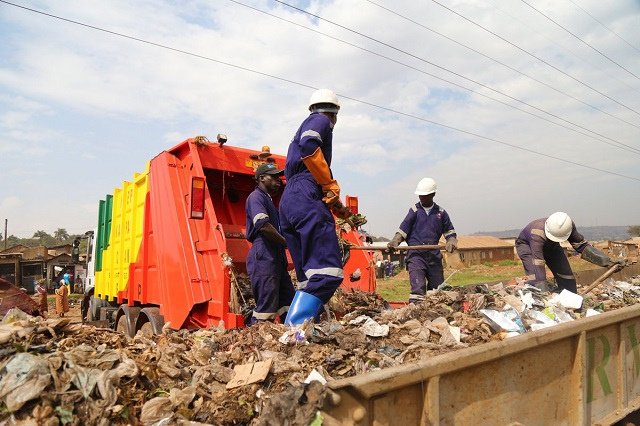
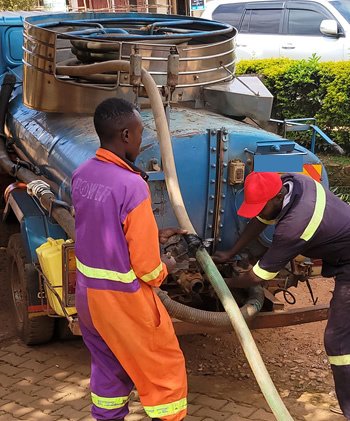
A licensed waste partner turns compliance from a project into a routine: correct classification at the audit, right containers on site, licensed transport, disposal at gazetted facilities, and paperwork delivered to your file after every run. That is exactly how our waste management services runs industrial contracts, from routine factory waste to construction site clearances. The cost of doing it properly is modest. The cost of a stop order, a fine or a cleanup liability is not.
Frequently asked questions
What is NEMA and what does it regulate?
The National Environment Management Authority is Uganda's environmental regulator. For waste, it oversees how businesses store, transport and dispose of waste, with stricter licensing and documentation for hazardous categories.
Who is responsible if a contractor dumps my company's waste illegally?
The generating business retains responsibility for its waste, which is why using licensed transporters and keeping disposal records is not bureaucracy but self-protection.
What records should a factory keep about its waste?
A practical minimum: what waste types you generate, volumes, who transported each consignment, where it was disposed, and the receipts or manifests proving it. Keep them organised; inspections go faster when the file is ready.