The cost of a solar system in Uganda is set by five things: how much power you use, how many hours of battery backup you want, the battery chemistry you choose, the quality tier of panels and inverter, and the practicalities of your roof and location. Two neighbours can receive honest quotes that differ by a factor of three because they asked for different systems, even if the houses look identical.
1. Your load, and when you use it
Solar is sized in two directions: the power everything draws at once (which sizes the inverter) and the energy you consume through the day and night (which sizes the panels and batteries). A house that runs lights and TV in the evening is a small system. Add an iron, a pump or daytime office equipment and each addition moves the price. The starting point of any serious quote is a load list, exactly like sizing a generator.
2. Backup hours: the battery bank
Batteries are usually the largest single cost. The question that sets their size is simple: when the grid goes and the sun is down, how long must everything keep running? Four hours of lights and TV is one bank. Running a fridge until morning is a bigger one. Be suspicious of any quote that does not state the storage in kilowatt-hours.
3. Battery chemistry: lithium vs lead-acid
- Lithium (LiFePO4) costs more upfront, lasts far more charge cycles, tolerates deeper discharge and needs no maintenance. Over ten years it is usually the cheaper battery.
- Lead-acid is cheaper on day one, heavier, and should only be discharged partway, so you must buy more capacity to get the same usable energy.
4. Equipment quality tiers
Panels from established manufacturers carry output warranties around 25 years. Cheap unbranded panels can lose output within a few seasons. The same split applies to inverters. The visible difference on the quote is price; the invisible difference is whether the system still performs in year ten.
5. Roof, distance and installation realities
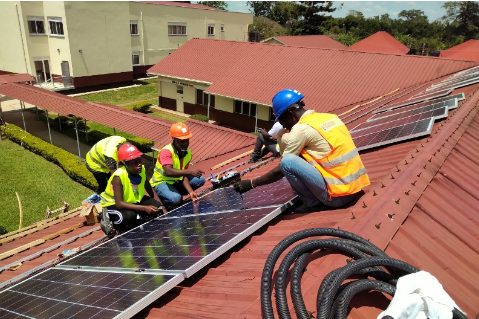
A sound iron-sheet roof facing the sun is the easy case. Tile, structural repairs, ground-mount frames, long cable runs or a site far from Kampala all add legitimate cost. This is also where quality shows: proper mounting, breakers, surge protection and earthing are part of a real installation, not extras.
How to compare quotes fairly
- Ask every bidder to quote the same load list and the same backup hours.
- Ask for storage in kWh, panel wattage totals, and named brands with warranty terms.
- Ask who does the after-sales service and what a call-out costs.
Our Power & Solar division designs from your load up, states every number in writing, and services what we install. If you are still weighing solar against a generator, this comparison walks through the economics.
Frequently asked questions
Why do solar quotes in Uganda differ so much for the same house?
Because quotes size different things: how many hours of backup the batteries hold, whether the chemistry is lithium or lead-acid, panel and inverter quality, and whether heavy loads like ironing and pumping are included or excluded.
What lasts longest in a solar system?
Good panels are typically warranted for 25 years of output. Inverters commonly serve about a decade. Batteries are the shortest-lived component, which is why battery chemistry and sizing dominate lifetime cost.
Can solar run a fridge, TV and lights all night in Uganda?
Yes, if the battery bank is sized for it. Overnight loads run entirely from the batteries, so the honest question for any quote is how many kilowatt-hours the bank stores, not how many panels sit on the roof.